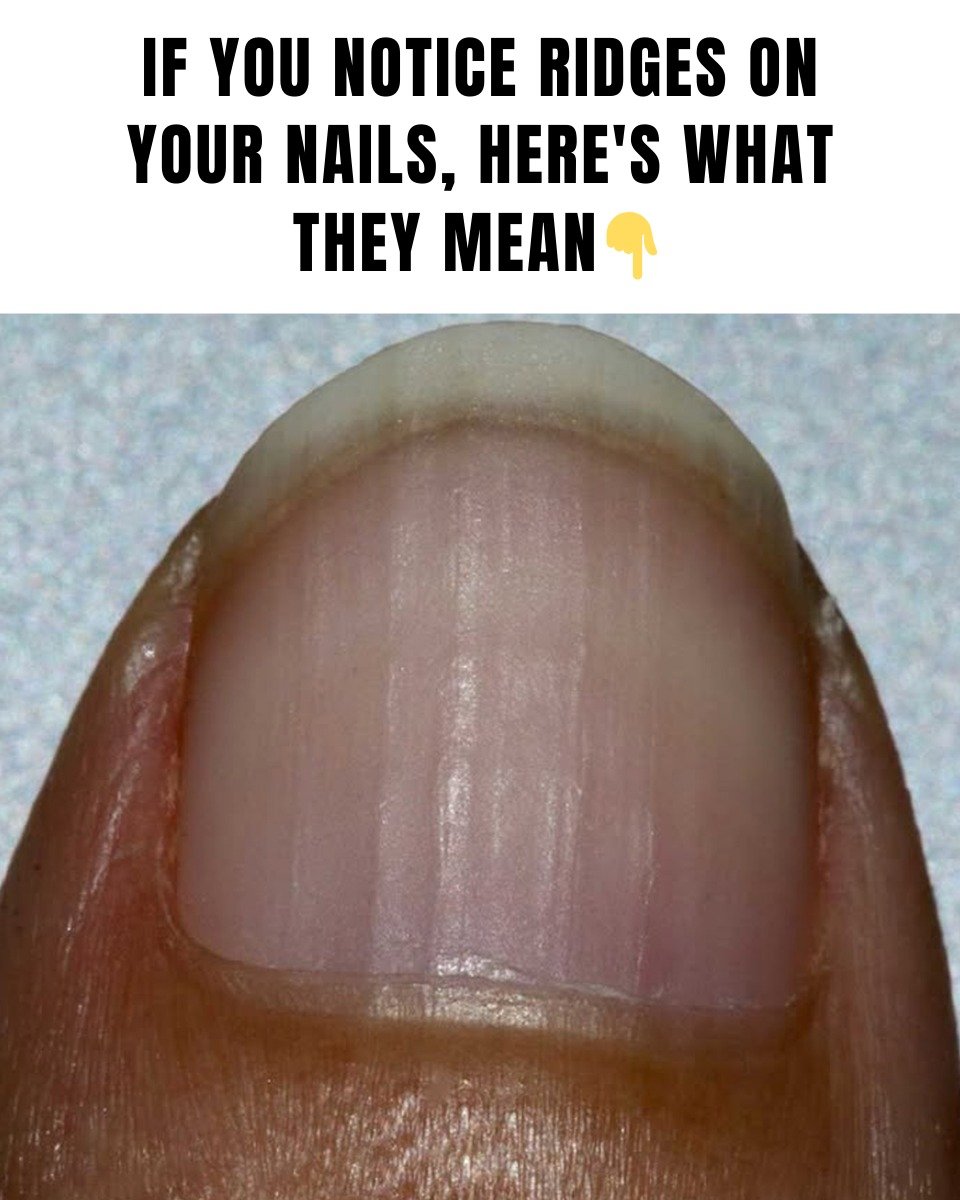
One morning, while applying nail polish or hand cream, you suddenly notice them. Fine lines—sometimes subtle, sometimes more pronounced—running across your nails. Where do they come from? Should you worry about them, or simply accept them?
Rest assured: ridges on the nails are very common and, in most cases, completely harmless. The key is learning how to understand them so you can take better care of your nails.
Nails: A Quiet Reflection of Our Overall Balance
Nails do more than simply make our hands look nice. Their appearance can also reflect our lifestyle, habits, and overall balance. Made mainly of keratin, nails grow slowly—just a few millimeters each month.
In other words, every nail tells part of our recent story: fatigue, seasonal changes, shifts in diet… all of these factors can leave a trace.
When ridges appear, they often indicate that the nail has gone through a different phase—much like the growth rings of a tree.
Vertical Ridges: The Most Common (and Usually Reassuring)
Vertical ridges, which run from the base of the nail to its tip, are the most common. They often appear over time and are generally considered a natural change.
As the years pass, nails tend to become slightly drier and less smooth, which explains the appearance of these fine lines.
In the vast majority of cases, they are nothing to worry about. However, they may become more noticeable during periods of fatigue, stress, or when the nails lack hydration. A well-nourished nail is usually smoother.

Horizontal Ridges: When the Nail Hits Pause
Less common, horizontal ridges tend to attract more attention. They usually correspond to a temporary slowdown in nail growth. This can occur after a period of significant stress, a short illness, or a physically demanding time for the body.
The nail eventually resumes its normal growth, and the ridge gradually moves toward the tip of the nail. If this happens only occasionally, there is usually no reason for concern, though it is still wise to keep an eye on it.
Diet and Nails: A Connection Often Overlooked
Ridged nails can also reflect a slightly unbalanced diet. When the body lacks certain essential nutrients, nails may become duller, more fragile, or more marked.
A varied diet rich in vegetables, fruits, proteins, and healthy fats can help improve nail quality. Drinking enough water also plays an important role: dehydrated nails tend to show marks more easily.
Age and Genetics Also Play a Role
Over time, nail growth naturally slows down. Nails may become drier and less even, a phenomenon similar to how hair texture changes with age.
Genetics also plays a role. Some people naturally have ridged nails without it having any impact on their health.

Healthy Habits for Smoother Nails
The good news is that a few simple habits can noticeably improve the appearance of nails. Regularly moisturizing your hands and cuticles is essential. Plant-based oils, gently massaged into the nails, can be especially effective.
Light buffing can also help smooth the surface, as long as it is done occasionally. Too much buffing can thin and weaken the nail. Finally, wearing gloves when doing household chores helps protect nails and maintain their quality day to day.
When Should You Seek Professional Advice?
If ridges appear suddenly, become very pronounced, or are accompanied by other unusual changes, it’s best to consult a healthcare professional. Listening to your body also means paying attention to these subtle signals.
In most cases, however, ridges on the nails are simply a reminder to slow down, stay better hydrated, and adopt a more attentive nail care routine in everyday life.